
Maxheat K in Kenya
At OLINC, we understand that when it comes to high-temperature industrial applications, nothing short of premium quality matters. That’s why we proudly bring you the genuine Maxheat K – the benchmark in high-alumina refractory castable cement. With our commitment to authenticity, competitive pricing, professional support, and fast delivery across Kenya, you’ll find that “quality Maxheat K at the best price” is more than a promise—it’s our standard.
Whether you’re lining furnaces or kilns, repairing industrial ovens, or patching refractory surfaces in cement plants or foundries, browsing through our offerings here will give you all the information you need to request a quotation and make an informed purchase.
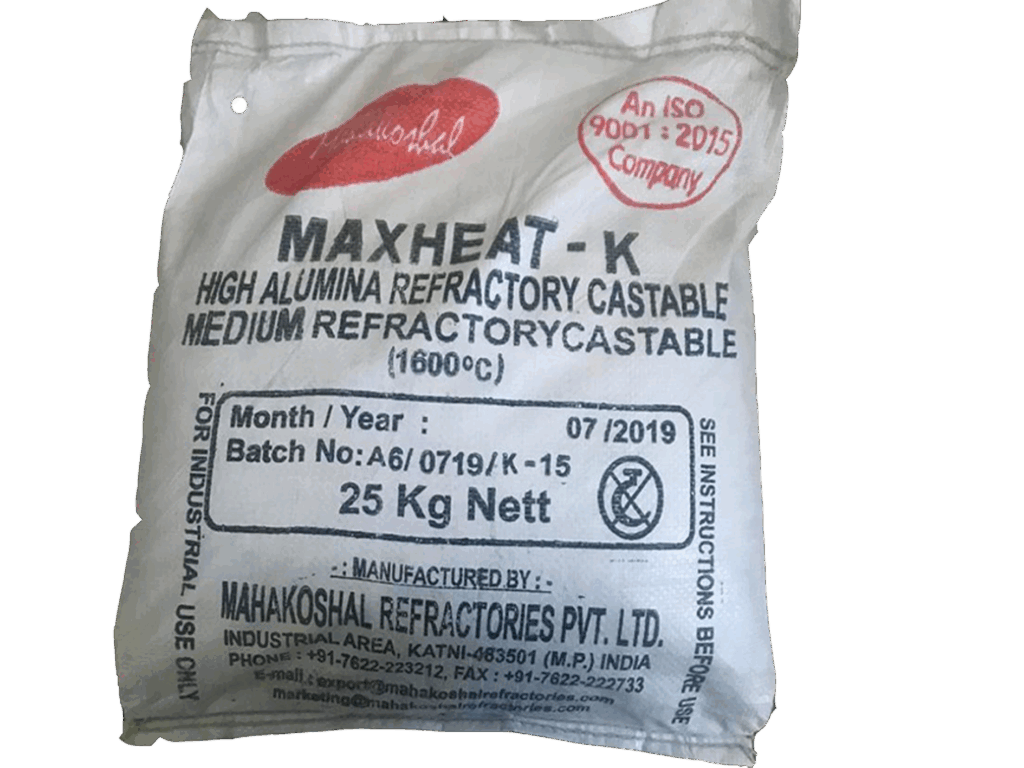
What is Maxheat K?
Maxheat K is a premium high-alumina refractory castable cement designed for heavy-duty thermal applications. This product is engineered to withstand high temperatures, drastic thermal cycling, mechanical abrasion and chemical attack, making it ideal for demanding industrial environments.
In plain terms, this means:
- It can be cast, rammed or molded into shapes and linings for high-temperature equipment.
- It offers structural durability under heat and wear, thus extending equipment lifespan and reducing maintenance.
- It’s a favourite for Kenyan industrial operations needing reliability in their refractory linings.
Why Choose Maxheat K from OLINC?
When you choose OLINC for your Maxheat K supply in Kenya, you’re opting for:
- Authenticity & Performance
We source genuine Maxheat K castable that meets the industry-specification alumina content and thermal ratings. According to Kenyan suppliers, the alumina content is typically 56–60 % for Maxheat K.
- Competitive Pricing
Because we specialize in refractory materials and bulk industrial orders, we are able to offer highly competitive pricing without compromising quality. We encourage you to request a quotation: we will tailor pricing for both small orders (e.g., 25 kg bags) and bulk shipments.
- Expert Technical Support
We don’t just sell you the product and leave you—our team offers guidance on application, proper install methods, curing, and repair scenarios to get the best performance out of your investment.
- Reliable Delivery Across Kenya
We maintain stock across Nairobi with dispatch and delivery available to major industrial centres (Nairobi, Mombasa, Kisumu, Eldoret, Nakuru, etc). You can focus on your project—and we’ll focus on getting the materials to you on time.
- Focus on Industrial Value
From foundries to cement plants, kilns to boilers, we understand the industrial environment and the stakes. A mis-application or low-grade product can cost downtime—so we emphasize value, reliability and durability.
Technical Specifications & Features
Here are the key technical details of Maxheat K that you should know when specifying or comparing it for your project:
| Specification | Details |
|---|---|
| Alumina (Al₂O₃) content | Approximately 56 – 60 % (depending on specific batch/grade) |
| Maximum Service Temperature | Up to approx. 1,600 °C in continuous service – an established benchmark for this grade. |
| Form / Bag Size | Supplied as a dry castable powder, typically in 25 kg bags. |
| Texture / Grain Size | Coarse granular texture for heavy-duty usage; maximum grain size about ~5 mm as indicated in specifications. |
| Bonding / Type | Hydraulic bonded, dense castable refractory. |
| Water Requirement for Mixing |
Benefits
- Volume stability under heat: As the product is made with dense refractory aggregates and high-alumina matrix, the risk of cracking under thermal expansion is reduced significantly.
- Extended service life: Choosing a high‐alumina castable like Maxheat K means fewer repairs and lower lifetime costs for your lining.
- Versatility of use: The product isn’t just for large furnaces—it can be used for repair patches, burner blocks, foundry hearthskilns, combustion zones and more.
Typical Applications in Kenya
Given the Kenyan industrial and manufacturing environment, here are the typical applications where Maxheat K excels—and why you as a client should consider it:
- Furnace Linings
For industrial furnaces (e.g., steel plants, foundries, heat-treatment processes), Maxheat K is ideal for the inner lining where temperatures rise to 1,200-1,600 °C. Its abrasion and thermal shock resistance reduce downtime and extend service intervals.
- Kilns & Cement Plants
In rotary kilns, cement plants, and similar heat-intensive environments, the refractory lining must endure extreme heat, abrasion from raw materials and chemical attack (e.g., from alkali and CO₂). Maxheat K’s 60 % alumina content and dense structure make it fit for purpose.
- Foundries, Incinerators & Combustion Zones
For smelting, melting, incineration or any process where molten materials, slag, hot gases, and thermal cycling are present, Maxheat K is a reliable choice.
- Repair & Maintenance
Rather than replacing the whole lining, many industrial operations use Maxheat K for patch repairs (ramming or casting) in worn or damaged sections—saving cost and downtime.
- Specialty Applications
Even for more niche uses like pizza ovens, fireplaces, or artisan melting ovens, the product is available and offers excellent performance though these use-cases are more common in smaller scale.
Installation Guidelines
Having the right material is only part of the job—the correct installation is what ensures you get full value from your investment. Here’s a breakdown of what you should ensure when using Maxheat K:
Preparation of Surface
- Ensure the hearth, lining or substrate is clean, free of loose debris, dust, rust, scale or previous castable that is failing.
- Pre-heat or dry the existing substrate if required, to remove moisture and prevent steam blistering.
- Check that any previous refractory bricks/fire-bricks or castables are properly anchored and sound.
Mixing & Casting
- Use clean, potable water. The specified mixing water is approximately 11–12.5 % by weight of the dry powder for Maxheat K.
- Mix thoroughly to achieve a homogeneous slurry, free of lumps and with the correct consistency for casting, trowelling or ramming as required.
- Apply by vibration casting, hand pouring, or by ramming depending on application and thickness. As provided: “Installation: Vibration Casting”.
- Ensure proper formwork/support if the lining is vertical or overhead.
Curing & Drying
- After the cast or rammed installation, allow initial set and then carry out a controlled drying regime (this may involve low-temperature heating to remove water).
- For full service temperature, a controlled heat-up schedule is highly recommended to avoid cracks due to rapid expansion.
- Consult our OLINC technical team for heat-up curve if unusual application or large volume.
Operational Considerations
- Once fully cured and heat-up completed, you can operate up to the service temperature (approximately 1600 °C for Maxheat K) in continuous duty conditions.
- Monitor lining during its first few thermal cycles to check for any unusual movement, cracking or spalling.
- For repair patches, ensure interfaces are soundly bonded, and joints are sealed. Maintenance & Monitoring
- Regular visual inspections help detect wear, abrasion or degradation.
- If your application involves heavy slag, molten metal or abrasive material, consider protective overlays or thicker castings.
- When needed, we can supply patch kits and guidance to extend lining life.
Storage, Handling & Safety Information Storage
- Store Maxheat K bags indoors on a dry pallet, off the floor, and protected from moisture.
- Avoid prolonged exposure to humidity, as moisture ingress can reduce shelf life or cause lumping of material.
- Keep bags sealed until use.
Handling
- Use standard personal protective equipment (PPE): gloves, dust mask/respirator (for powder), eye protection and work boots.
- Avoid inhalation of dust; in enclosed areas, ensure adequate ventilation.
- Avoid direct contact of powder on skin for prolonged periods; wash after handling if necessary.
Safety
- The product is a hydraulic bonded castable; normal industrial safety procedures apply (see safety data sheet).
- Avoid mixing with any other chemicals unless recommended by OLINC technical team.
- During installation and especially initial heat-up, ensure no combustible materials are in contact with fresh castable.
Ordering, Delivery & Pricing Details in Kenya
How to Order
- Simply reach out to us at OLINC (via phone, WhatsApp, or email) and specify the product name “Maxheat K”, quantity (bags or tonnes), and your project location.
- Share details of the application: e.g., furnace lining size, kiln type, patch or new installation, expected operating temperature – this helps us advise the correct quantity and installation method.
- We will provide you with a Pro-forma Invoice and lead time.
Delivery & Logistics
- Our stock is in Nairobi with prompt dispatch; delivery to major centres within Kenya is typically 2–5 working days depending on location.
- For remote or cross-border delivery (Uganda, Rwanda, Tanzania) we also facilitate; local Kenyan delivery costs apply.
- Bulk orders (full truck loads) attract volume discounts and favourable freight terms.
Pricing
- Pricing depends on quantity, bag size (standard 25kg), delivery location and any installation support required.
- We consistently review pricing to stay competitive as Kenya’s industrial supply market evolves.
For an accurate quotation, kindly ask us for a quotation now—we will tailor the offer specifically for your needs.Payment & Credit Terms
For first-time customers payments are typically advanced (bank transfer or mobile money) upon order.
Established clients may be eligible for credit terms—please contact our sales team.
All orders are shipped only after payment is cleared or terms agreed.